Hunger In Louisiana
Food Insecurity Is a Continuum
Food insecurity is not always a permanent condition, nor does it look the same for every household. It exists along a continuum—from worrying that food may run out, to purchasing less nutritious foods because they are more affordable, to skipping meals or going entire days without eating.
A household’s circumstances can change quickly. A job loss, reduction in work hours, unexpected medical expense, natural disaster, rising rent, car repair or change in family responsibilities can suddenly make it difficult to afford enough nutritious food. Seniors living on fixed incomes may face difficult choices between groceries, medicine and utilities. Working families may earn too much to qualify for assistance but still struggle to cover basic expenses.
Neighbors may move into and out of food insecurity as their lives change. Food assistance provides critical stability during these periods—helping families meet immediate needs, protect their health and regain financial footing. Understanding hunger as a continuum reminds us that anyone may need help at some point and that every neighbor deserves to be treated with dignity and respect.
Hunger in Louisiana: Key Facts
Louisiana continues to experience some of the highest hunger rates in the nation. According to Feeding America’s Map the Meal Gap 2026, Louisiana has the nation’s
fifth-highest overall food-insecurity rate
fifth-highest child food-insecurity rate.
seventh-highest senior food-insecurity rate.
888,130 Louisiana neighbors face hunger
An estimated 19.3% of Louisiana residents—nearly one in five people—experienced food insecurity in 2024, the fifth-highest rate among the states.
272,960 Louisiana children face hunger
Approximately 25.7% of Louisiana children—more than one in four—live in food-insecure households, giving Louisiana the nation’s fifth-highest child food-insecurity rate.
109,079 Louisiana seniors face hunger
An estimated 10.8% of Louisiana adults age 60 and older experience food insecurity. Louisiana is tied for the seventh-highest senior food-insecurity rate among the states.
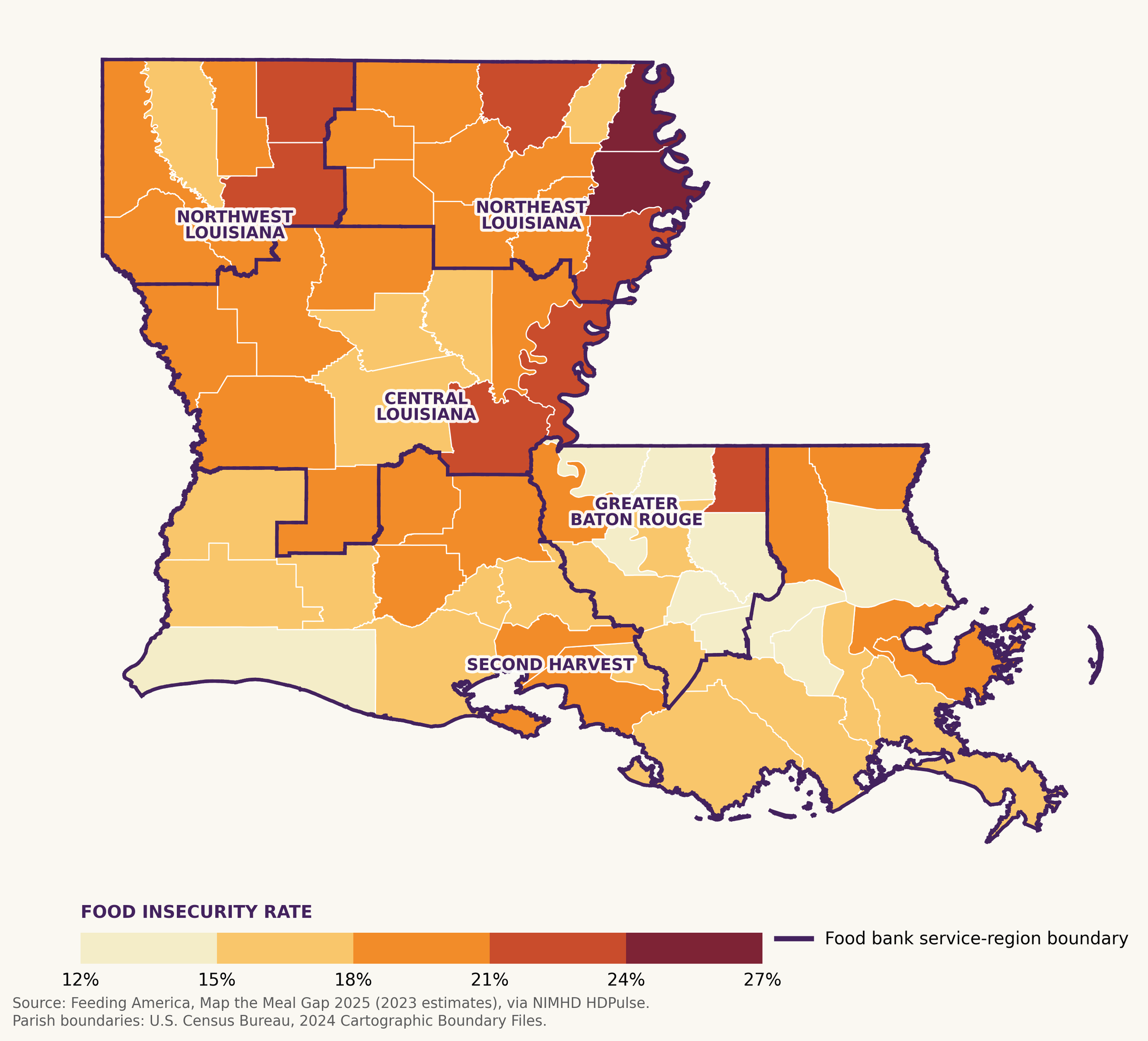
Hunger exists in every parish
Food insecurity affects neighbors in urban, suburban and rural communities throughout all 64 Louisiana parishes.
Louisiana faces a $588 million food gap
Food-insecure households needed an estimated $588 million in additional resources to afford enough food in 2024.
The average meal costs $3.49
The estimated average cost of a meal in Louisiana was $3.49, placing additional pressure on households already struggling with housing, utilities, transportation, childcare and medical expenses.
Many neighbors do not qualify for SNAP
Approximately 35% of food-insecure Louisianans have household incomes above Louisiana’s gross income threshold for SNAP. Charitable food assistance remains essential for neighbors who need help but may not qualify for federal nutrition benefits.
Hunger does not affect every community equally
The estimated 2024 food-insecurity rate was:
29% among Black Louisianans
28% among Hispanic Louisianans
19.3% across Louisiana’s overall population
These disparities reflect longstanding barriers affecting income, employment, transportation, health and access to affordable, nutritious food.
Sources: Feeding America, Map the Meal Gap 2026, using 2024 data; U.S. Department of Agriculture household food-security estimates, 2022–2024. Feeding America’s rankings compare individual food-insecurity rates among the 50 states. USDA’s ranking uses a separate household-level measure.