Advocacy
It takes more than food to fight hunger
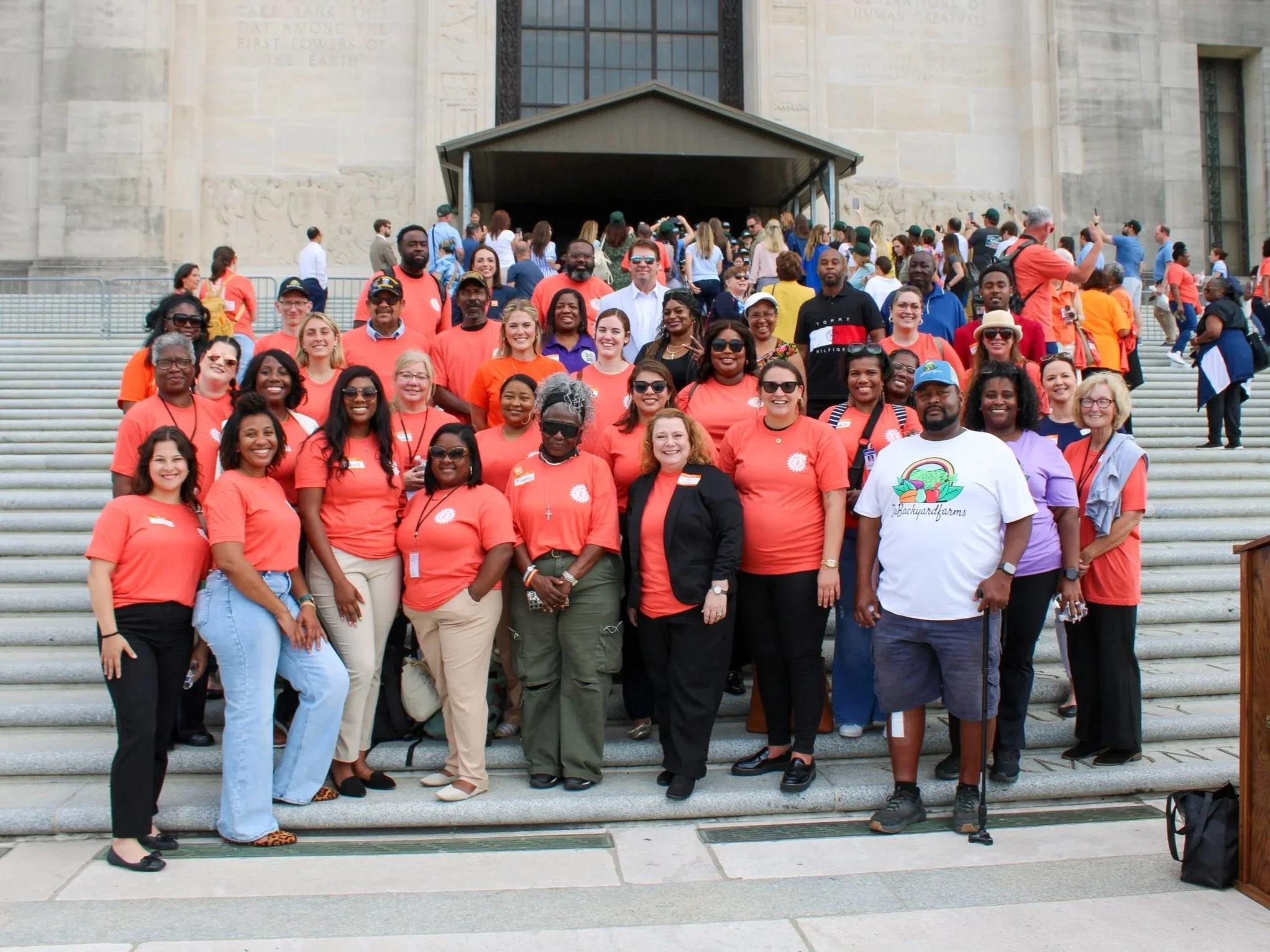
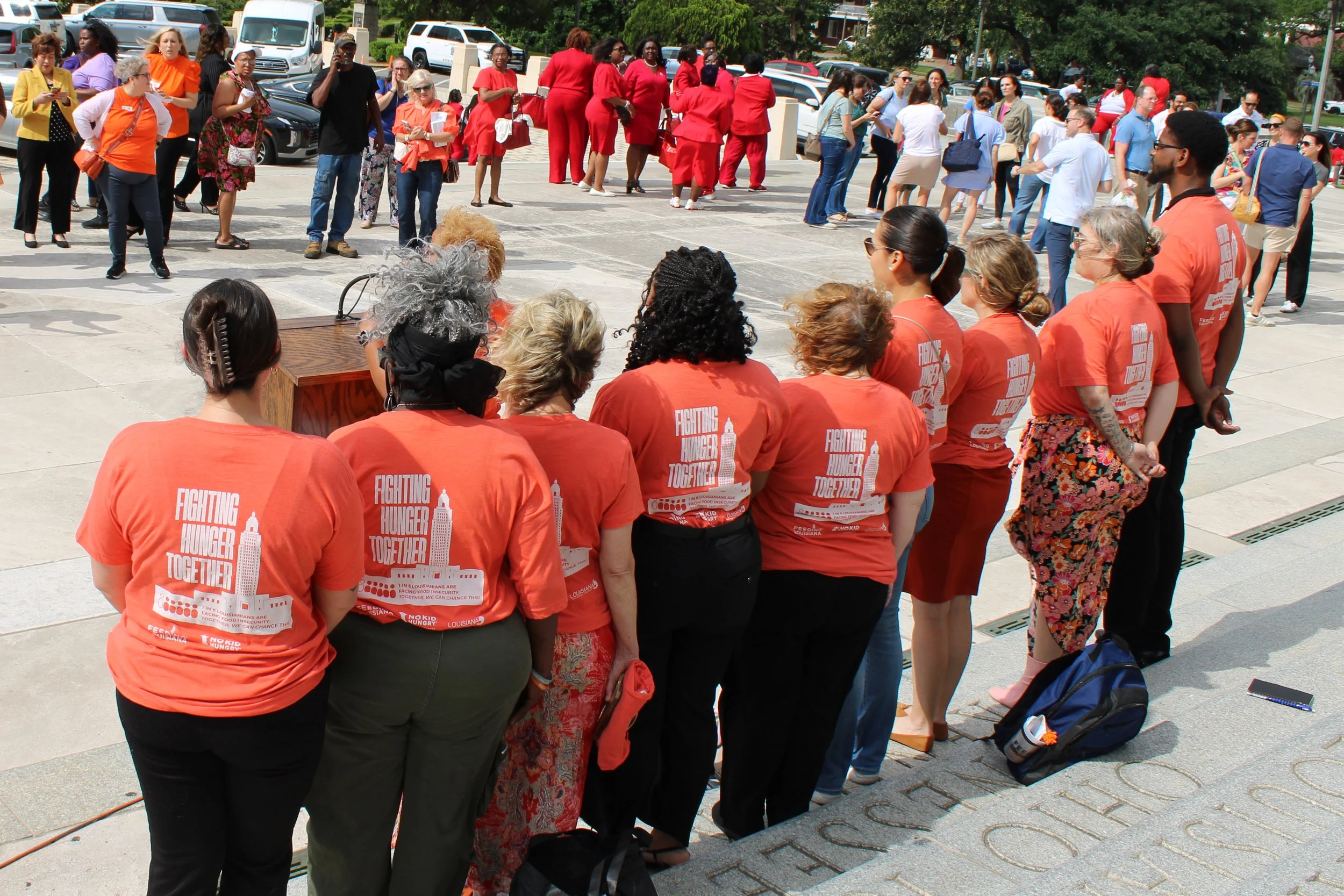
Feeding Louisiana and our partner agencies are on the front lines of hunger. We all have a stake in ensuring our neighbors have enough to eat. Every day, elected officials in Congress, state legislators, and local leaders shape the state of hunger. Join us in advocating for programs and policies that address the many factors that contribute to food insecurity.
Our Policy Priorities
Expand access to food
Provide disaster preparation and response support
Protect and strengthen programs that fight hunger
Protect and strengthen the Charitable Food Assistance Network
2026 Regular Legislative Session Bill Watch
Bills Related to Hunger, Food Systems, and Nutrition Access
House Bills - As of 6/18/2026
-
HB 218 would require Louisiana public schools (including charter schools) to implement food insecurity screening programs for K–12 students at enrollment and once each semester, include screening in school-based health clinic assessments, maintain confidentiality, and provide referral procedures for students identified as at risk.
-
HB 223 is a sunset “re-creation” bill for the Department of Children and Family Services (DCFS). Under current sunset law, DCFS would begin terminating operations July 1, 2026 and statutory authority would cease July 1, 2027 unless the Legislature re-creates the department; HB 223 would re-create DCFS effective June 30, 2026 and extend its sunset timeline so termination would begin July 1, 2030 and statutory authority would cease July
Note: HB 223 doesn’t “end” DCFS—it prevents DCFS from sunsetting in 2026–2027 by re-authorizing it.
-
Provides for the membership of the Children's Cabinet Advisory Board and its subcommittees including removing the Louisiana Maternal and Child Health Coalition representative and adds the superintendent of the Louisiana State Police to the advisory board. Also provides that the secretary of the department administering both SNAP and the Kinship Care Program shall appoint a member to serve on the subcommittee.
-
Proposed law requires Department of Education to provide funding to governing authorities of school nutrition programs that participate in the Free School Breakfast Program for each reimbursable school breakfast served, up to one breakfast per student per school day.
-
House Bill 335 proposes amendments to existing Louisiana law (R.S. 46:233.4) regarding the verification of citizenship for individuals applying for public benefits. The bill expands the scope of who is responsible for these verifications and introduces new oversight mechanisms to ensure compliance.
Under present law, state agencies and political subdivisions are already required to verify that applicants for federal, state, or local public benefits are either U.S. citizens or "qualified aliens" with satisfactory immigration status. HB 335 seeks to broaden these requirements by mandating verification beyond state agencies, requiring audits, and requires annual reports.
-
HB 381 would make a company ineligible for Louisiana’s High Impact Jobs Program if 20% or more of its Louisiana employees qualify for SNAP, and it directs Louisiana Economic Development (LED) to coordinate with the Louisiana Department of Health (LDH) to access the information needed to implement the requirement.
-
IHB 689 would require DCFS to report to LDH within 72 hours when a child is placed in DCFS custody, and require LDH to immediately (1) check whether a parent’s household benefits include the child, (2) adjust SNAP/WIC/FITAP to reflect the change, and (3) if the child is on Medicaid, issue a new managed care card at the child’s new residence. It also requires LDH to assess residency if the child is included in more than one benefit household and to refer to LDH’s fraud unit when someone failed to report a household change and continued receiving benefits for a child no longer living in the household.
Status: Pending House Health and Welfare. -
House Bill 1211 aims to streamline how summer meals are provided to children in rural Louisiana by creating a specific regulatory category for "non-congregate" sites. Essentially, it distinguishes sites that simply hand out sealed, shelf-stable meals from full-service cafeterias or restaurants.
Senate Bills As of 6/18/2026
-
SB 52 would require DCFS to report to LDH within 72 hours when a child is placed in DCFS custody, and require LDH to immediately review/adjust SNAP, WIC, and FITAP benefits in the parent household, issue a new Medicaid managed care card for the child at the new residence, and take additional steps when the child returns home or when duplicate household claims are identified. It also requires referral to LDH’s fraud unit in certain cases involving failure to report household changes.
-
SB 57 would make a narrow change to Louisiana’s existing food-labeling law for certain additives and chemicals. Current law requires manufacturers to use a QR code and notice language for covered products, with violations treated as a state Sanitary Code violation, while already exempting medical foods, retail-prepared/labeled foods, and alcoholic beverages. The proposed bill adds foods for special dietary use to the list of products exempt from those labeling requirements.
-
SB 194 requires that if verification results in a final determination that an applicant is not a U.S. citizen or otherwise lacks satisfactory immigration status—and the person entered without inspection/admission or overstayed—the agency must refer the individual to ICE, terminate any ongoing benefits, and submit a monthly report to the Secretary of State for voter list maintenance.
-
SB 219 would create an Office of Health and Nutrition within the Louisiana Department of Health (LDH), led by an executive director reporting to the LDH secretary. The office would lead and coordinate the Governor’s Council on Physical Fitness and Sports, WIC, and CSFP, and would develop policy for SNAP implementation within LDH; LDH is authorized to transfer funding and positions internally to establish the office.
-
SB 265 would abolish the Department of Children and Family Services (DCFS) and redistribute its functions—moving child support enforcement to Louisiana Works (with a new Office of Child Support) and child welfare to the Louisiana Department of Health (LDH) (with a new Office of Child Welfare). It also accelerates the effective date of the previously-enacted transfer of certain family/support programs (e.g., TANF) to Louisiana Works to October 1, 2026, updates statutory references, and transfers relevant contracts and employees.
-
Senate Bill 415 proposes the establishment of the Empower Louisiana Food Purchase Program. This initiative seeks to create a "SNAP-like" system administered by the Louisiana Department of Health (LDH) and implemented through qualified 501(c)(3) nonprofit organizations. Participating nonprofits are responsible for funding the food purchase cards. The bill requires organizations to establish a process allowing private individuals to fund cards for themselves or others. Card usage is strictly limited to food items currently eligible under federal SNAP guidelines. Cash withdrawals, transfers, or purchases of non-food items are strictly prohibited. The department may initiate the program as a pilot in one administrative region before expanding statewide. An evaluation report on the program’s effectiveness must be submitted to the House and Senate health committees by March 1, 2028.
This Bill Watch is provided for informational purposes only and is intended to help educate readers about 2026 Regular Session bills related to hunger, food systems, and nutrition access. Feeding Louisiana does not take a formal position on the bills summarized here; however, we recognize that legislative actions can and will have both positive and unintended impacts on our neighbors facing hunger, the operations of Louisiana’s food banks, and the broader effort to build a hunger-free Louisiana.
Feeding Louisiana Policy Priorities 2026
Who We Are
Feeding Louisiana is the statewide association of the five Feeding America–affiliated food banks serving all 64 parishes: Second Harvest Food Bank of Greater New Orleans & Acadiana, Greater Baton Rouge Food Bank, Food Bank of Central Louisiana, Food Bank of Northeast Louisiana, and Food Bank of Northwest Louisiana.
Our Approach
Our policy agenda is statewide, data-informed, nonpartisan, and coordinated with partners. It centers the lived expertise of neighbors experiencing hunger and focuses on actions where our voice and capacity add the most value—meeting urgent needs today while advancing a future in which every Louisianan has equitable access to the nutritious food they need to thrive. Addressing food insecurity requires both emergency food and work on root causes: poverty, lack of affordable housing, chronic health conditions, and discrimination.
Note: Additional legislation affecting our ability to nourish communities, shorten the line for food assistance, and elevate neighbor and partner voices may arise during the year; not all priorities are captured here.
-
$5 Million: Louisiana Farmers to Food Banks Initiative
Feeding Louisiana seeks a $5 million state appropriation to establish a reliable market for small-scale Louisiana farmers and food producers by purchasing Louisiana-grown products and directing that food to the five regional food banks for distribution to neighbors facing food insecurity. This investment strengthens Louisiana agriculture, keeps state dollars in-state, and immediately increases the supply of nutritious food available through the statewide food bank network.
The problem this addresses:
Farmers need dependable buyers: Small and mid-sized producers often lack stable, high-volume purchasers and predictable contracts.
Food banks face supply pressure: Charitable food inventories fluctuate and are often insufficient to meet community demand—especially for fresh, healthy foods.
Louisiana can solve two problems at once: A state-funded purchasing program can stabilize farm income while improving food access statewide.
What the $5 million would do?
Create a state-supported purchasing market for Louisiana producers by:
Buying Louisiana-grown food (priority on produce, eggs, protein, seafood, and other nutritious staples where feasible).
Aggregating and distributing purchases through the five Feeding America–affiliated regional food banks.
Delivering food to neighbors through food bank pantries, mobile distributions, senior distributions, and other community access points.
Why this is a smart state investment?
Supports Louisiana agriculture: Creates consistent demand and predictable revenue for local producers.
Strengthens local economies: Keeps food dollars circulating in Louisiana communities.
Improves food access quickly: Converts funding directly into food on shelves and at distributions statewide.
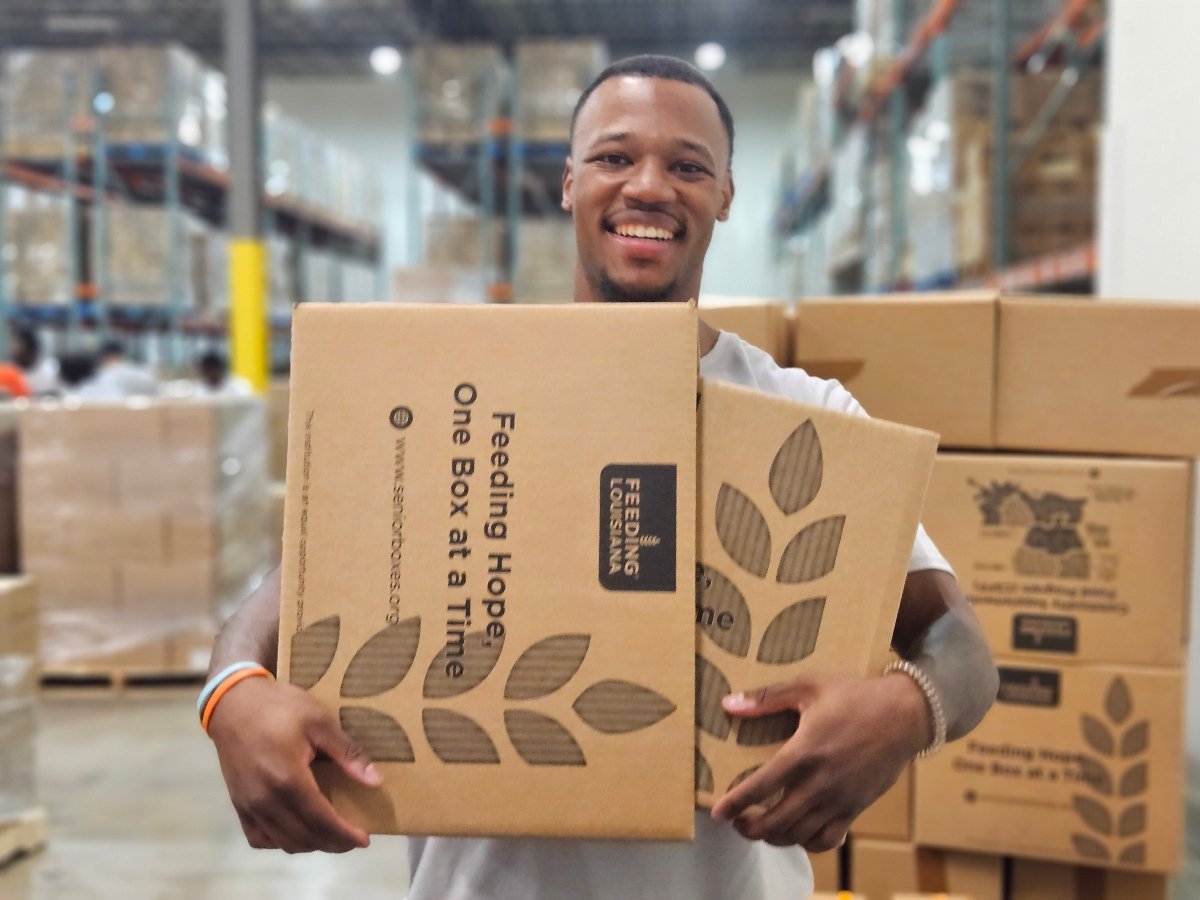
Efficient statewide infrastructure already exists: The five regional food banks have the warehousing, logistics, and community partner networks to move food rapidly.
-
Strengthen TEFAP. Increase funding, flexibility, and infrastructure support for The Emergency Food Assistance Program.
Modernize SNAP. Protect access, simplify enrollment/recertification, support reasonable waivers, and ensure benefit adequacy.
Enhance Child Nutrition Programs. Improve and expand NSLP/SBP, SFSP, CACFP, and WIC participation and operations.
Boost Food Recovery & Access. Expand incentives/liability protections and invest in rescue logistics.
Advance Equity. Ensure federal nutrition programs equitably reach rural communities, communities of color, older adults, people with disabilities, and limited-English-proficient households.
Child Tax Credit. Restore an expanded, fully refundable CTC for the lowest-income families.
Sustain Proven Models. Promote and fund programs such as LFPA (Local Food Purchase Assistance) that connect neighbors with local, nutritious food.
Uniting Partners to Feed More Neighbors
Together with lawmakers, agencies, schools, healthcare, farmers, retailers, and community partners, Feeding Louisiana will move more nutritious food to more neighbors—while advancing policies that reduce the need for emergency food over time.